Well-described is not the same as wanted.
By Dejan Kovacevic, Founder
In the LLM era, anyone can produce a fluent, confident description of an idea in minutes, and an AI will happily tell them it’s brilliant. So the wrong things get built, and sometimes funded, with no real traction behind them. The gap between a well-described idea and a wanted one has never been wider.
ValidLab exists to close that gap. It validates an idea deeply, combining product discipline with real customer evidence, through guided methods an AI alone cannot run, drawn from two decades of hands-on product practice. The goal is simple: the right things get built, ship sooner, and reach the right investors faster.
The moment this had to exist
I was trained the European way: plan the perfect thing, analyze it to death, then build it. In a fast, ever-changing market, that is often just a way to build the wrong thing beautifully: you over-plan until the market moves under you, or you skip the homework and ship something messy. Neither works.
I came to the design process early. For two decades I’ve been a believer: be comfortable with a messy start, accept that the problem can change, that the solution can change, and that there is rarely a single right answer. I had watched companies pour money into solving the wrong thing and then pay again to unwind it. That is the gap ValidLab closes — build the right thing, fast, with the evidence to know it’s right.
The background behind the method
The method behind ValidLab is my own. I championed lean validation in Europe early — before “validate first” was common — and later completed MIT’s executive education in product leadership, which sharpened the approach and tested it against how the best operators work. Working across software and hardware, I saw both extremes up close: the over-planned product that ships too late into a market that has already moved, and the under-researched one built on pure enthusiasm. ValidLab is the middle path those teams never had.
ValidLab is an independent company and is not affiliated with, endorsed by, or sponsored by MIT. References to MIT describe the founder’s own executive education.
Eloquence without evidence: one I watched happen
At one SaaS company, the team fell in love with an idea — and the most dangerous believer was the CEO. The spreadsheet absorbed every assumption (a plan in Excel can “prove” anything), and instead of testing the idea against reality, leadership tried to bend reality to fit the idea so it would look right. The crash, and the damage, were avoidable.
The opposite taught me just as much. A hardware company I worked with treated its customers as part of the R&D team, building, testing, and validating a physical product with the people who would actually buy it. It sold out in two weeks. (We under-forecast demand and couldn’t supply fast enough — evidence got the product right; a planning miss got the quantity wrong.) The right product beats a perfect plan. Both lessons are built into ValidLab.
Why the name is ValidLab
A lab is where you run the experiment instead of arguing about the result. ValidLab exists to raise the success rate of what gets built: more pitches that land with investors, more features people actually adopt, more ventures that genuinely serve the people they were built for, and, along the way, better-trained builders. It gives you credible methods in a structured, guided way, and you keep control over the process. It is not a black box that hands you an answer you can’t interrogate. Trust the process, and what comes out is worth something to you and to the people you build for.
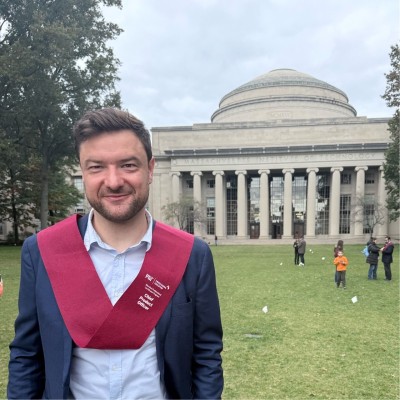
Dejan Kovacevic is a product leader by trade and by temperament, with two decades across software and hardware. An early champion of lean validation in Europe, he helped bring tools like the Lean Canvas to European teams, and later completed MIT’s executive education in product leadership, which sharpened the approach behind ValidLab. He built ValidLab to give every founder the disciplined, evidence-first validation he had to learn the hard way.
Dejan on LinkedIn ↗“If everyone focused on the impact — the greater good of everyone we build for — the world would be a much better place.”